
What Happens to Raw Footage That Never Gets Edited
Thousands of hours of footage sits on hard drives and never becomes anything. This blog is about the cost of unedited footage — and why outsourcing your video editing is the move that changes everything for videographers and creators.
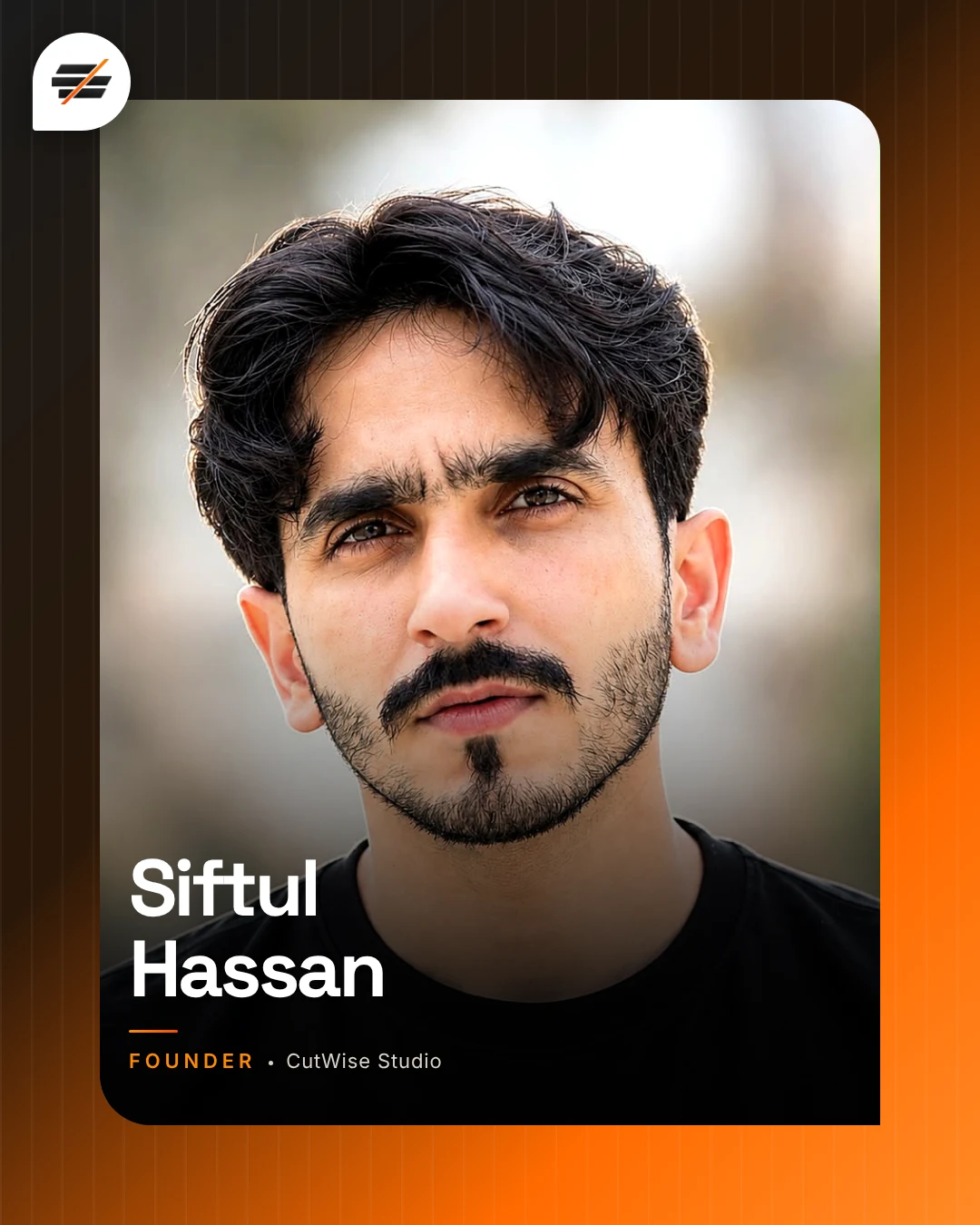 Siftul HassanOctober 22, 2026 · 9 min read
There is a hard drive sitting somewhere near a desk.
It might be yours. It might belong to a wedding videographer three time zones away from you. It might be in a drawer in a production office. But it exists — and on it, there is footage that will never become anything.
Not because the footage is bad. Some of it is great. Some of it captured something real and unrepeatable — a look exchanged across a room, a moment of pure joy, a crowd at the exact peak of a night that will never happen exactly that way again.
But it will never be edited. Because the person who shot it ran out of time. Or ran out of energy. Or took on three new projects before they finished the ones they had. Or simply found that the editing part — the long, demanding, technically intensive part of the job — kept slipping to the bottom of the priority list.
This blog is about what that costs. And about what changes when you stop trying to do everything yourself and find a professional video editing service that handles the post-production while you focus on what you do best.
The Hidden Cost of Unedited Footage
Most videographers and content creators think about the cost of editing in terms of time. How many hours does it take to cut a wedding highlight film? Six? Eight? Twelve? And how many projects are waiting while you are sitting in the edit suite doing that work?
But the real cost of unedited footage is not just the hours it takes to edit. It is everything that does not happen while the footage sits on a drive untouched.
The client who is waiting. Every week that goes by without a finished video is a week the client's trust in you erodes slightly. Even if they understand that editing takes time, waiting is uncomfortable. And discomfort breeds doubt.
The next project you cannot take on. If you are a wedding videographer who takes eight weeks to deliver a finished film, you can only take a limited number of bookings per season. If you could get that delivery time down to two weeks, you could take more bookings, earn more revenue, and still deliver a better client experience.
The referrals that do not come. A satisfied client who received their wedding film two weeks after the wedding tells people about you. A client who waited three months and had to send chaser emails does not — or worse, they tell people what the experience was like.
The footage itself. Unedited footage degrades in value over time. Not technically — the pixels do not change. But emotionally, for the couple or the client, the distance from the event grows. The excitement fades. The urgency of "I can not wait to see the video" softens into "oh yeah, we still have not watched that." By the time the video arrives, it lands into a different emotional context than it would have if it had arrived three weeks after the event.
This is the real cost of footage that never gets edited. It is not just lost time. It is lost clients, lost referrals, lost revenue, and lost emotional impact.
Why Videographers Struggle to Keep Up With Editing
This is not a discipline problem. It is a capacity problem.
Wedding videographers are at their busiest during the season — often shooting two or three weddings per weekend from late spring through early autumn. By Sunday night, there is new footage on the cards. By Monday morning, there is an inbox with enquiries, existing clients asking for updates, and a calendar that is already full.
The editing does not stop because the shooting does not stop. And editing cannot be compressed beyond a certain point. A wedding film takes the time it takes. You can not rush the color grade. You can not rush the music sync. You can not rush the emotional structure of a film that a couple will watch for the rest of their lives.
So the footage piles up. The timeline in the edit suite gets longer. The delivery dates slip. The stress rises.
This is not a personal failing. It is a structural problem that a lot of creative businesses hit when they reach a certain level of demand — and it has a structural solution.
What Outsourcing Video Editing Actually Looks Like
When most people think about outsourcing editing, they picture a complicated handoff process — long briefing documents, back-and-forth communication, footage that comes back looking nothing like what they wanted.
That is not what a good outsource video editing partnership looks like.
Here is what it actually looks like when it works:
You shoot. You upload. After the shoot, you upload the raw footage to a shared drive — Google Drive, Dropbox, WeTransfer, whatever you use. You send a brief that tells the editor the essentials: the couple's names, the date, the music, any reference style films, and the deadline.
The editor takes it from there. One dedicated editor — not a rotating queue, not a different person every time — takes your footage and builds the first cut. They already know your style. They have edited for you before. They know your color preferences, your pacing, and what kind of moments you like to feature. The brief they need from you gets shorter every time because they have already internalized what you are going for.
You get a first cut back in 48 hours. Not two weeks. 48 hours. You review it, leave notes, and send them back. The editor makes the changes. You approve the final version and deliver to your client.
Your client gets their film faster than they expected. And faster than any of your competitors typically deliver. That speed becomes part of your brand. It becomes a talking point. It becomes something your clients tell their friends about.
This is what outsourcing wedding video editing looks like with the right partner. It is not complicated. It is a clean, efficient workflow that removes the bottleneck and lets you do what you are actually good at — shooting great footage.
The One Thing That Makes Outsourcing Work or Fail
Most failed outsourcing attempts have one thing in common: the editor did not understand the style.
When a videographer sends footage to an unfamiliar editor and gets back something that does not look like their work, the instinct is to pull everything back in-house and never try again. But the problem was not outsourcing. The problem was the lack of a shared style brief and a consistent editor relationship.
At CutWise Studio, the first project with any new client always involves a detailed style brief. We ask you to send:
- Three to five existing finished films that represent your style
- Notes on your typical color approach — warm, cool, neutral, cinematic
- Your preferred pacing — fast cuts or slower, more cinematic edits
- The music direction — indie folk, instrumental, cinematic score, upbeat pop
- Your typical deliverables — highlight film duration, social teaser length, format exports
After the first project, we store all of this. The second project requires a shorter brief. The third requires almost no brief at all. Over time, we learn your style well enough that a new project can be uploaded with minimal instruction and come back looking exactly like it came from your edit suite.
That is the compound value of a consistent editing partnership. It gets easier and more efficient over time, not harder.
Who Benefits Most From Outsourcing Video Editing
Not every videographer or creator needs to outsource their editing. But here are the situations where it makes the most sense:
You are fully booked during peak season. If you are shooting every weekend during wedding season and editing every weekday, you are at capacity. You physically cannot take more bookings without either compromising quality or pushing deadlines. Outsourcing editing means you can take more bookings without changing your shooting schedule.
You are falling behind on deliveries. If you have clients waiting more than six weeks for their films, something needs to change. Outsourcing the editing is usually the fastest way to reduce the backlog without turning away new work.
You want to grow but editing is the bottleneck. Some videographers are ready to scale their business — to hire a second shooter, take on higher-value clients, expand into new markets — but every hour they spend editing is an hour they are not spending on growth. Outsourcing editing frees up that time.
You are burning out. Creative burnout in the wedding industry is real. The combination of emotionally intense shoots and long editing hours, month after month, takes a toll. Outsourcing the part of the workflow that takes the most time and causes the most stress is not a sign of failure. It is a smart business decision.
Your clients need faster delivery. Some clients — especially corporate clients and real estate agents — expect fast turnaround. If you cannot deliver a finished real estate listing video within 48 hours of the shoot, you will lose that client to someone who can.
What to Look for in a Video Editing Service
If you are considering outsourcing for the first time, here is how to evaluate a potential partner:
Turnaround time. 48 hours for a first cut is the standard you should expect. Anything longer than five business days is too slow for most workflows.
Dedicated editors. A service that assigns a different editor to each project every time will never learn your style. Look for a service that gives you the same editor consistently.
Revision process. How many revisions are included? How quickly are revisions turned around? These questions determine how smooth the workflow actually feels in practice.
Communication. Does the service communicate proactively? Do they confirm receipt of footage? Do they flag issues before they become problems? Clear, responsive communication is essential for a partnership that works at volume.
Portfolio and style range. Does their existing work match the quality and style you are looking for? Ask to see examples that are similar to your own output.
At CutWise Studio, we offer wedding video editing, real estate video editing, event video editing, and music party video editing — all with a 48-hour first cut turnaround, one dedicated editor per project, and two rounds of revisions included.
The Decision Point
At some point in every growing creative business, there is a decision point: keep doing everything yourself and stay exactly where you are, or make a structural change that allows you to grow.
Outsourcing editing is often that structural change. It is not giving up control. It is gaining capacity. It is the difference between being fully booked and being able to choose your clients. Between burning out and actually enjoying the work again. Between delivering films six weeks after the wedding and delivering them two weeks later when the emotion is still fresh.
The footage on that hard drive deserves to become something. Your clients deserve to receive their films on time. And you deserve a workflow that does not cost you your love of the work.
That is what the right professional video editing service gives you.
Start With One Project
You do not have to commit to a full subscription on day one. Send us one project. See how the process works. See how the first cut comes back. See how the revision round feels.
If it works for you — and it usually does — we can talk about a monthly plan. If it does not, you have lost nothing except the time it took to upload the footage.
Send your first project to CutWise Studio
Siftul edits wedding films, listing videos, event recaps and aftermovies for clients worldwide, including the USA, UK, Australia and Canada.